
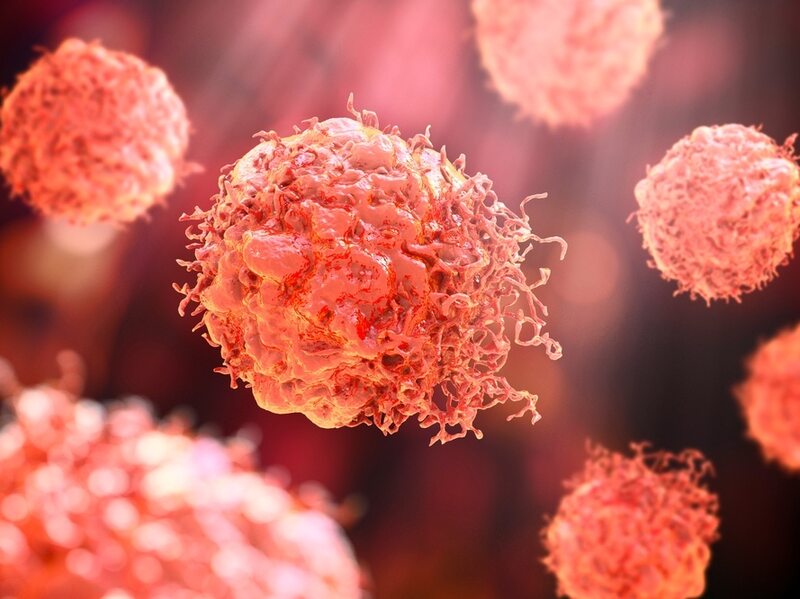

Osteosarcoma is a malignant bone tumor that is usually diagnosed in young people. Tumor lesions originate in mesenchymal cells and spread throughout the body, forming distant metastases. What are the causes and symptoms of osteosarcoma? We explain.
- Bone sarcomas
- Other types of sarcomas
- Osteosarcoma - what you need to know?
- How often is osteosarcoma diagnosed?
- Osteosarcoma - causes
- Symptoms suggestive of osteosarcoma
- diagnosis of osteosarcoma
- Treatment of osteosarcoma
Bone cancer is a serious disease that can be diagnosed at any stage of life. Most commonly found in bones osteosarcoma - this cancer is diagnosed in about 60% of primary cancers, which means that the disease develops as a result of mutations in the cells that make up the bone.
Bone sarcomas
Sarcomas are a large group of cancers that can also arise from other cells such as cartilage and muscle. Often these tumors are diagnosed within the limbs, such as around the knees. Osteosarcoma is a malignant disease that is mainly diagnosed in young people. The symptoms of this malignancy may resemble those of an injury or injury; it happens that cancer for a long time does not cause symptoms that would prompt a visit to the doctor.
Bone sarcomas are cancerwhich may require radical surgery (limb amputation). Early detection of the disease promises the best prognosis. It is worth knowing that bone sarcomas can cause distant metastases, for example, to the lungs, so persistent symptoms, such as swelling and pain in the bones and around the joints, as well as an unnatural increase in the circumference of the limb and pathological fractures, are an indication for urgent medical consultation.
Other types of sarcomas
Other types of sarcomas that also pose a threat to health and life are soft tissue sarcomas and sarcomas that form in the retroperitoneal cavity and the digestive system. Differentiation of sarcomas depends on the type of tissue from which they originate. We distinguish:
-
sarcomas arising from adipose tissue (liposarcomas),
-
sarcomas arising from the tissue of blood vessels (angiosarcomas),
-
sarcomas arising from smooth muscle tissue (leiomyosarcoma),
-
sarcomas arising from striated muscle tissue (rhabdomyosarcomas),
-
sarcomas arising from fibrous tissue (fibrosarcomas),
-
sarcomas that develop from cartilage (chondrosarcoma).
Most sarcomas are cancers that are more commonly diagnosed in children and adolescents, accounting for about 15% of all malignancies in this age group. In adults, osteosarcoma and other sarcomas are classified as rare tumors, accounting for about 1% of all malignant neoplasms.
Osteosarcoma - what you need to know?
By definition, bone sarcomas develop from mesenchymal cells. This is a bone tumor that forms osteoid. Osteoid is an organic substance naturally present in the bones, the function of which is to increase the elasticity and strength of the bones.
Osteosarcoma most often develops from bone tissue. Belongs to the group of bone and cartilage tumors. If osteosarcoma develops outside the bone tissue, which happens in isolated cases with soft tissue involvement, the tumor is classified as soft tissue sarcoma.
Although osteosarcoma is the most common malignant lesion, it occurs in other subtypes that vary in degree of malignancy. Thus, we can deal, for example, with benign osteosarcoma, as well as with a very aggressive lesion that quickly infiltrates the surrounding tissues and causes distant metastases.
How often is osteosarcoma diagnosed?
Most often, osteosarcoma is diagnosed in children and adolescents. Most cases of this cancer are diagnosed in adolescents aged 15-19 years. Rarely, osteosarcoma is diagnosed in children under 5 years of age. In adults, the peak incidence occurs in the 5th-6th decade of life. Statistics on the incidence of osteosarcoma indicate a slightly higher incidence in men.
Early diagnosis of cancer increases the chances of patients for a complete cure. In the past, sarcomas were considered incurable, but modern treatments have greatly improved the prognosis of patients.
Osteosarcoma - causes
All sarcomas are tumors of unknown etiology. However, factors have been identified that increase the risk of developing osteosarcoma and other types of sarcoma.
Risk factors for osteosarcoma include, first of all, frequent contact with ionizing radiation, to which people suffering from various types of injuries are exposed. Other factors that increase the risk of developing osteosarcoma include:
-
chronic osteoarthritis and other diseases affecting the skeletal system,
-
operations taking into account the use of metal bone connecting elements,
-
frequent bone fractures.
In children and adolescents, the risk of developing osteosarcoma increases with intensive bone growth - the relationship between intensive cell division and cancer development extends to other types of cancer. This is due to a higher probability of spontaneous mutations within cells.
Moreover, risk factors for developing bone sarcoma also include the treatment of other types of cancer with chemotherapy, as well as the course of other diseases that are not cancerous.
Symptoms suggestive of osteosarcoma
Osteosarcoma can cause unusual symptoms. One of these is bone pain, which can be confused with growing pains that are common in children and adolescents. Of particular concern are unilateral pains in the bones and around the joints, which increase at night and do not subside after the administration of painkillers. The pain gets worse as the cancer progresses. At first, they can occur only periodically, for example, after physical exertion, but over time they constantly annoy, interfering with normal functioning.
There may be swelling in the affected area of the bone, as well as redness of the skin, which indicates increasing inflammation. Sometimes a soft tissue tumor is palpated.
Symptoms that may indicate bone tumors also include changes in limb circumference, limited joint mobility, and pathological fractures. The symptoms of osteosarcoma vary depending on the location of the cancer. Sometimes it is located in the spine, causing, for example, recurrent symptoms of sciatica.
Bone sarcoma is characterized by an increase in symptoms and a lack of response to the applied symptomatic treatment. It happens that patients are treated for an injury, but the therapy used is ineffective - long-term ailments associated with injury or injury may also indicate osteosarcoma.
Due to the more frequent occurrence of bone sarcomas in children and adolescents, a sharp change in physical activity, i.e. reluctance to play sports, due to pain, for example, in the knee area. It is also worth paying attention to abrupt changes in gait and possible postural defects, which may be associated with a desire to unload the affected limb.
diagnosis of osteosarcoma
In order to correctly diagnose osteosarcoma, it is necessary to carry out specialized tests, i.e. molecular examination and histopathological examination of the site of bone lesion. The exact location and size of the tumor, as well as the sites of possible metastases, are diagnosed based on the results of imaging studies, which include, but are not limited to, X-ray examination, magnetic resonance imaging and ultrasound of the affected area. At the stage of diagnosing bone sarcoma, laboratory tests are also carried out, i.e. blood test and urinalysis.
Treatment of osteosarcoma
Treatment for osteosarcoma depends on the stage of the disease. Early detection of a small primary tumor and the absence of metastases is a chance for conservative treatment, including excision of the focus with a supply of healthy tissue. The effectiveness of treatment is evaluated on the basis of the lesion caused by the disease within the affected bone and other organs, if, in addition to the primary tumor, metastases are also diagnosed.
The only treatment for osteosarcoma is radical or sparing surgery, which involves excision of the tumor. Treatment should be carried out in specialized centers. Improving treatment outcomes can be achieved through the use of adjuvant therapy, i.e. chemotherapy.
The best therapeutic effects are provided by early detection of the disease. This applies to all malignant neoplasms, the symptoms of which require immediate medical advice. Sarcomas often develop asymptomatically, so it is worth remembering the necessary prevention, and not ignoring periodic pain, which is initially the only symptom of osteosarcoma.
Unfortunately, the removal of the primary tumor is not always tantamount to a complete cure, since the disease can recur. The earlier osteosarcoma is detected, the better the prognosis for patients.
Source: Wprost

