

With many injuries, putting on and taking off ordinary T-shirts, sweaters, trousers and other things is very problematic. For example, pull on a T-shirt if your shoulder or arm is hit by shrapnel. Therefore, the wounded need special adaptive clothing. What is he? Imagine a jacket that has Velcro instead of seams on the sides and sleeves. This design allows you to “open” the jacket and put it on the wounded person without causing him pain, and then fasten it with Velcro. The volunteer project “Sewing Company” for the production of such clothes was launched volunteers Marina Palchenko and Ksenia Samoilich from Dnieper. Now women’s sewing companies operate throughout Ukraine and in many countries. Previously, FACTS wrote about how trolley designer Anna Pavlus created her own brand of adaptive clothing during the war.
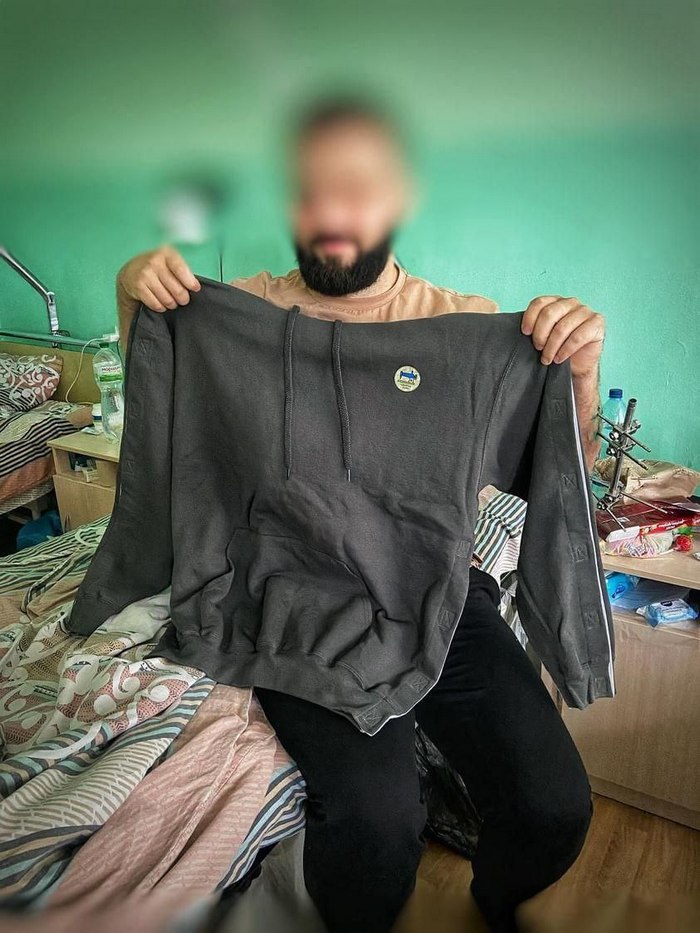
.jpeg "На цьому фото добре видно, що на рукаві кофти немає швів. Це дає можливість вдягти її на руку, на якій встановлено апарат зовнішньої фіксації, а потім закрити на липучки")
“There are already more than 500 craftswomen in our sewing companies”
- In Ukraine we now have 15 women’s sewing companies - in Dnepr, Kyiv, Poltava, Zhitomir, Lvov, Rivne, Lutsk, Novomoskovsk, Petropavlovka, and other cities and villages - told FACTS Ksenia Samoilich. — Also from among Ukrainian women abroad. The sewing company “Norway” was the first to be formed outside of Ukraine, then “Canada”, “Poland”, “Germany”, “Switzerland”, “Great Britain”. The girls sew things according to our patterns and master classes. They send finished products directly to hospitals (we help about 90 medical institutions) and to the front. For example, our sewing company from Poltava recently sent adaptive clothing to the stabilization points of the Azov regiment and the Da Vinci Wolves battalion. Sewing companies from other countries also provide such clothing to soldiers undergoing treatment abroad.
Read also: The drones themselves will search for targets and hit them: unique Ukrainian developments will significantly increase the efficiency of FPV drones and save the lives of pilots
— Did your team develop models and patterns for sewing adaptive clothing on its own?
- Look, Marina Palchenko helped wounded soldiers in hospitals back in 2014-2015. At first she fed (because at first the food supply was poor). I saw that many wounded people found it difficult to put on and take off ordinary clothes. She began to alter their things - she adapted the clothes to the needs of these guys. Marina perfectly understood what clothing was needed for various injuries. So, this topic was very familiar to her.
At first we had paper patterns. To share them with volunteers from other cities, we made electronic patterns and posted them on the Internet for free access. They can be used not only by volunteers, but also by women whose son or man was injured and now needs adaptive clothing. A mother or wife can sew it for their loved one.
— Has the onset of the cold season affected the need for adaptive clothing?
- Naturally, it had an impact, because now we need much more things than in the summer and warm autumn. We have been preparing for this, but we still barely have time to fulfill requests. Therefore, it is important that as many people as possible and even entire sewing workshops join our project. This can be done using the link.
— What things are in greatest demand?
- The need for adaptive warm sweaters is especially great. For stabilization points we sew them from warmer fabrics, and for hospitals - lighter ones, because hospitals have heating.
— How can I find your patterns online?
- They can be downloaded on our telegram channel “Sewing Company”. The next step is to print the fragments on A4 sheets and then glue them together. Get paper patterns. Our telegram channel also contains a video of a master class on how to sew adaptive items using patterns.
For those who do not have fabric, we can send it. We buy material in bulk (we collect donations for this, you can follow the link), cut them for sewing a large number of things (say, 200 pants), then divide the blanks into small batches (say, 10 pants), add to them the necessary accessories (Velcro ) , laces, elastic bands, labels, packaging bags) and send these sets to the craftsmen. They sew, wash, package, add labels and send to volunteers at the hospital or medical professionals.
Read also: The most dangerous is the “black widow”: in order to kill and maim Ukrainian sappers, the occupiers set booby traps en masse
– Can wounded soldiers or their relatives individually contact you with a request to provide them with adaptive clothing?
- Yes, we welcome such requests. The wounded defender or one of his relatives should fill out the Google form (electronic form) of the address request that we have developed and send it to us. The form should indicate what exactly the wounded person needs (say, three Velcro shorts, two pants, three T-shirts) and we will send it to them.
— Can you help in situations where your standard models are not suitable for a particular injury?
- Yes we can. Via video conference, we will help relatives or volunteers take the necessary measurements and sew items according to them. We recently sewed a cover (or you can call it a trouser leg) for a defender who has a special metal external fixation device installed on his leg for bone growth. Even his foot is stitched with machine needles. This round-shaped structure has a considerable diameter and a meter in length. It was necessary to insulate the leg, because the metal knitting needles let the cold through - right down to the bones, even in not very cold weather. This military man is being treated in a hospital in Mukachevo. Volunteers from that city made the requests that we asked for, passed them on to Poltava to one of our most active volunteers, mother of two children, Alexandra Galenko, and she sewed a drawstring cover from warm fabric for that wounded man.
— Have you counted how many people are in your sewing companies around the world?
- There are already more than 500 craftsmen (these are those who have registered and we are sending sewing kits). Some of the women helped us one-time, others participate in the project on a regular basis. For example, Alexandra Galenko has been with us for a year and a half. She now heads the Poltava sewing company. By the way, at Poltava Lyceum No. 17, on the initiative of the caretaker Elvira Gontar, almost all teachers and other employees sew adaptive clothes.
Everyone can help wounded soldiers by giving them blankets, warm sweaters, and sweatpants.
- Do you know who of these five hundred is the oldest and youngest?
— We know: the oldest Lyubov Yarosh from the Zhytomyr region is 103 years old, and the youngest are about 2 years old - children play and help their mothers stuff orthopedic pillows-tassels. My niece started helping at the age of 4 when we sewed balaclavas and thermal underwear. Now she is making tassel pillows. The children also draw pictures that we put in bags with things for the defenders. And the craftswomen add goodies, tea, and amulets to these parcels (the angels made by Lyubov Salatyan from Odessa have become a symbol of our project).
— Do your craftsmen work exclusively on a volunteer basis - without pay?
- Yes, without payment. Most of them work somewhere, they have children, so, as a rule, they sew for us in the evenings and on weekends. We don’t rush anyone, but if, say, a woman undertakes to sew 20 panties, then we ask that they do it within 14 days. This is quite doable. For each of us, sewing adaptive clothing is our common gratitude to the defenders.
— Are there problems at customs when sending clothes for the wounded in Ukraine that were sewn by volunteers abroad?
- Recently there was an unpleasant story. Polish customs officers allowed the parcel through, but Ukrainian ones did not. They explained this by saying that the items looked like they were for sale. Because they are placed in bags and have labels (they indicate the size and name of the craftswoman who sewed them). Customs officials said that taxes need to be paid. So far this is a single case of this kind.
.jpeg "Кіберкофти, відшиті майстринями")
— How can people who read this interview help your project?
- We really need warm (preferably fleece) blankets (for the evacuation of the wounded on the front lines and in hospitals) of one and a half sizes. Also now there is a great need for warm, thin sweaters and sweatpants (of course, they must be in good condition and clean). We will change sweaters and skinny ones into adaptive ones, and simply transfer the pants to stabilization points. You need a lot of such things, because when the wounded are taken out of the battlefield, their uniform is often bloody, dirty, and wet. The person needs to be changed into dry and clean clothes - sweatpants and warm sweaters. Warm woolen socks are also very useful for defenders with leg wounds. Many women know how to knit. They can join in knitting both regular and adaptive button socks.
We also ask people to support our meeting for materials for sewing adaptive clothing. The necessary details are posted on the pages of the sewing company on Instagram and Telegram. On these pages you can write what things people want to give to the fighters. We will advise where to send the parcel.
Read also: Even janitors work in bulletproof vests: how many people and in what conditions live in Kherson a year after his dismissal
— How was your volunteer project created?
- On the fourth day of the full-scale invasion, Marina Palchenko wrote a post on social networks that there was a request for sewing warm balaclavas and thermal underwear for our defenders. Ladies, including me, responded and brought sewing machines and materials from home. A local businessman helped with the purchase of fabric. Before the big war, Marina and I attended the same sewing courses, but on different days, so we didn’t overlap.
Soon, a request came from a military hospital in Dnieper for drawstring panties for the wounded. We made a batch of these products, plus we filmed a master class on how to sew them - so that people from other cities would know that there was a need for adaptive clothing (few people knew about it then) and join us.
We came up with the idea of adding the word “armor” to the names of the things we sewed for the front: “armored T-shirt”, “armored jacket”, “armored pants”. And what for the wounded is the word “cyber”: “cyber pants”, “cyber jackets”, “cyber pants”, “cyber T-shirt”, etc. Gradually we moved to specializing in adaptive clothing.
At some point, Marina and I were left on our own and could not sew as much as our fabric supplies allowed. Therefore, we turned to girls from all over Ukraine on social networks with a call to join us. They suggested dividing the work: Marina and I cut out the material and send it for sewing to those who respond. Gradually, the circle of participants and the geography of our project began to increase and grew to its current size.
Previously, FACTS wrote that there are even royalty in the team of helpers, this is how Daniil Shcherbakov determines the scale of his volunteering.
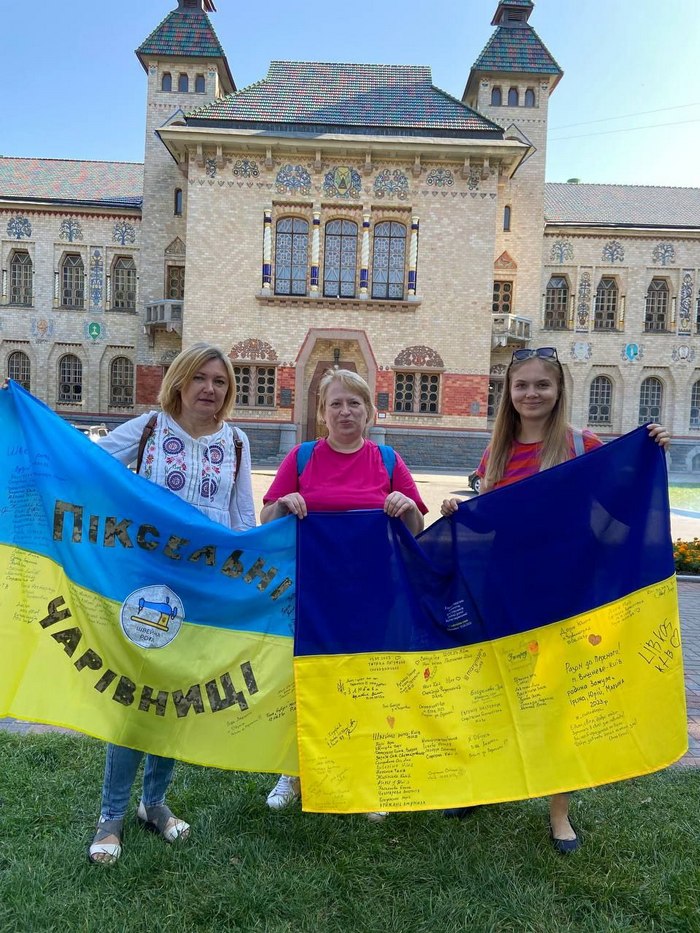
In the photo in the title Ksenia Samoilich (on the right) with the girls of the Sewing Company project in Dnieper
Photos courtesy of Ksenia Samoilich
Source: Fakty

I am currently working as a news website author at Daily News Hack. I mostly cover trending news and have been doing so for quite some time now. I have always had a keen interest in current affairs and the world around me, which is what led me to my current job.
I firmly believe that the best way to learn about something is by doing it yourself and that is why I love my job so much. It allows me to be constantly learning about new things and then sharing that knowledge with others.
I am also a big believer in the power of networking and building relationships. I think that LinkedIn is a great platform for connecting with like-minded people from all over the world.

