

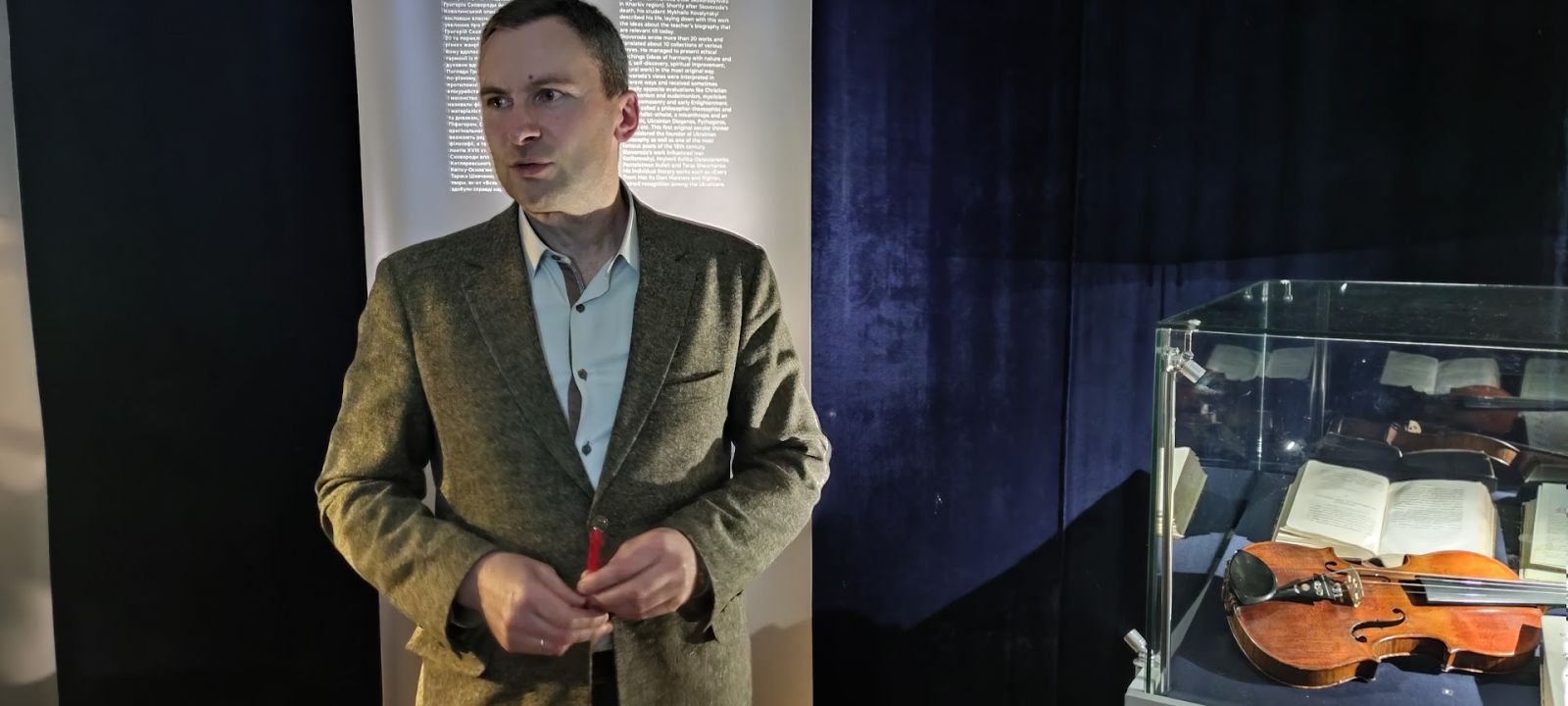
- We are talking about (the language does not return to say the word “biography”), let’s say, the work of Mikhail Kovalinsky, a student of Skovoroda, about his teacher, - told at the opening of the exhibition “The World of Hryhoriy Skovoroda” at the National Museum of the History of Ukraine, her scientific consultant Professor Maxim Yaremenko. - Kovalinsky in this work aimed to emphasize the virtues of Grigory Savich as much as possible, and not to provide biographical facts about him. It is according to the work of Kovalinsky (a high-ranking royal official. - Auth.) we learned that his teacher was born in 1722.
“Father Skovoroda was a Cossack, engaged in commerce - he sold vodka”
- An alternative date of birth of Grigory Skovoroda is known, – Professor Yaremenko continues. - Here it should be said that at the beginning of the 19th century, the philologist and historian of ancient Ukrainian literature, Izmail Sreznevsky, began collecting evidence about Skovoroda from people who allegedly knew him (there were such people at that time). In these stories, as they say, the sinful is mixed with the righteous. For example, according to one of them, Skovoroda was born in the family of a priest. However, we know for sure that not a priest, but a Cossack. So, Sreznevsky names another date of birth of Grigory Skovoroda - 1726.
It is possible that in fact, not 300 years have passed since the birth of Skovoroda, but somewhat less. But we know for sure that he was born on December 3rd.
- How is this known?
- From one of Skovoroda’s letters, written by him on the night of November 22 (this is according to the old style, and according to the new - December 3). Grigory Savovich noticed a letter in it that this was the day when he was once born (in the hundredth town of Chernukha of the Lubensky regiment, this is approximately in the center of the Hetmanate).
In those days, children were usually named after saints. (Let’s say the boy was born on January 14 - St. Basil’s Day, which is why they give him the name Vasily. - Auth.). But in the case of Skovoroda, not everything is so simple: in the church calendar on November 22, there is not a single saint named Gregory. Therefore, one can only guess which saint named Gregory was the heavenly patron of Skovoroda. By the way, we know for sure that his younger brother was born on January 1, 1732 and named after St. Basil.
Was their family rich?
- Not poor. In Soviet times, a false stereotype was created that Skovoroda from the family is just a person and is the bearer of a peasant worldview. In fact, he is of a noble family - a document has been preserved from which we know that his father Savva was a Cossack, though not from a foreman. He was not too rich, but he did not need it either, because he was engaged in trade - he sold vodka. And the sale of vodka at all times is a profitable business. According to the legal norms of that time, the Cossacks belonged to the nobility.
“A letter arrived from Riga to the museum in Skovorodinovka, the author of which reported that her grandfather was the grandson of Grigory Skovoroda”
- What is known about Skovoroda’s childhood years?
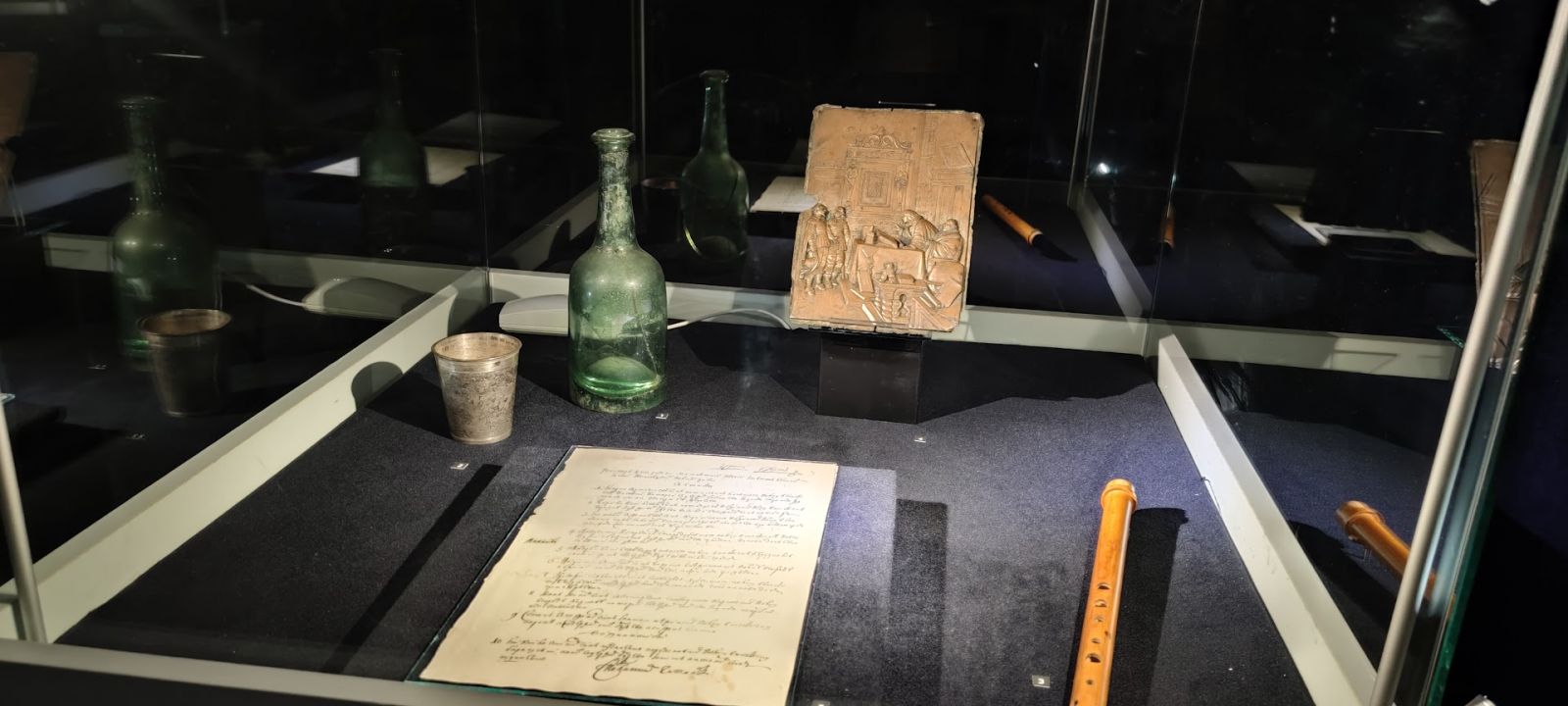
- Virtually nothing. But we know for sure that in the 1740s he was a student at the Kiev-Mohyla Academy. Moreover, he interrupted his studies there several times. This exhibition presents a handwritten treatise, which was collectively copied by the students of Mogilyanka. One of the fragments is handwritten by Skovoroda. He even left his signature. Gregory reached the academy to the course “Theology”, but never finished it.
Why did he stop studying?
- For different reasons. It was such that he dropped out of school in order to embark on a journey - to the imperial capitals. In St. Petersburg, he became a singer in the court choir. In one of the government documents for 1740, it is noted that Grigory Skovoroda is a singer of the court chapel. In the mentioned work of his student Mikhail Kovalinsky, it is written that Skovoroda returned to Kyiv in 1744, when Queen Elizabeth Petrovna came here to bow to the Kyiv shrines. But Grigory Skovoroda does not appear in the lists of the people accompanying her. Therefore, when he returned to Kyiv, it is not known exactly. But what came back, that’s for sure. Moreover, with a lot of money, he had the opportunity to lend a substantial amount to one deacon. We know this for sure. For information about the court case remained: Grigory sued the deacon of one of the churches in Podil because he did not return the debt of 30 rubles to Skovoroda. It was a lot of money - for them it was possible to start a farm, buy livestock.
We know of at least one more great voyage of Skovoroda. But only from one source - the work of Kovalinsky has already been mentioned. We are talking about the participation of Gregory in the Tokay commission sent to Hungary.
- What is this commission?
- Special - to blame. It should be said here that in the 20 years of the 18th century, interest in wine arose in St. Petersburg. At that time, the closest place where they made quality wine was Hungary. Therefore, at the state level (!) The Tokay Commission was created, whose members went there to buy a noble drink. For this commission, educated, well-mannered young people were required. Usually they were recruited on the territory of Ukraine. But again, there is one problem: documents about the members of the Tokay Commission from the 1730s to the mid-1760s have been preserved. There is no frying pan.
- Did Skovoroda have a wife?
- Not. And, as far as we know, he had no children. But in Soviet times, a letter from Riga arrived at the Skovoroda museum in the village of Skovorodinovka (Kharkiv region), in which an elderly woman reported that her grandfather was the grandson of Grigory Skovoroda. Like, the philosopher had an amorous story, which resulted in a secret wedding and the birth of a child. This is probably one of the many myths associated with Skovoroda.
What did he do for a living?
- Teaching. For a long time he tried to become a teacher in one of the educational institutions. But nothing came of it. Finally became a home inspector (teacher). The inspector lived in a family of students, raised and taught them. A family whose head belonged to a Cossack foreman could afford to hire an inspector and had the appropriate income.
- What creative legacy did Skovoroda leave?
— Approximately 20 original works and 10 translations. All Skovoroda’s work is permeated with religious symbols. One of the ethical principles that he professed: know yourself.
- Are there any things that are known for sure that they belonged to Skovoroda?
- There are very few such things, except for manuscripts. By the way, in the 1920s, the Hryhoriy Skovoroda Museum of Sloboda Ukraine was created in Kharkov, and the staff began to collect exhibits that were related to the philosopher. People brought them different things. The bulletin of this museum has been preserved, with a photograph of a stick, which Grigory Savich carved with his own hand. Whether this thing really belonged to him is almost impossible to verify.
- Are there any lifetime portraits of Skovoroda?
- With portraits such a story: from 1769 Grigory Savovich lived in the families of representatives of the Cossack foreman of Slobozhanshchina - as an inspector (teacher) of their children. It is believed that one of these families commissioned a portrait of Skovoroda. All artistic interpretations of his appearance are variants of that portrait.
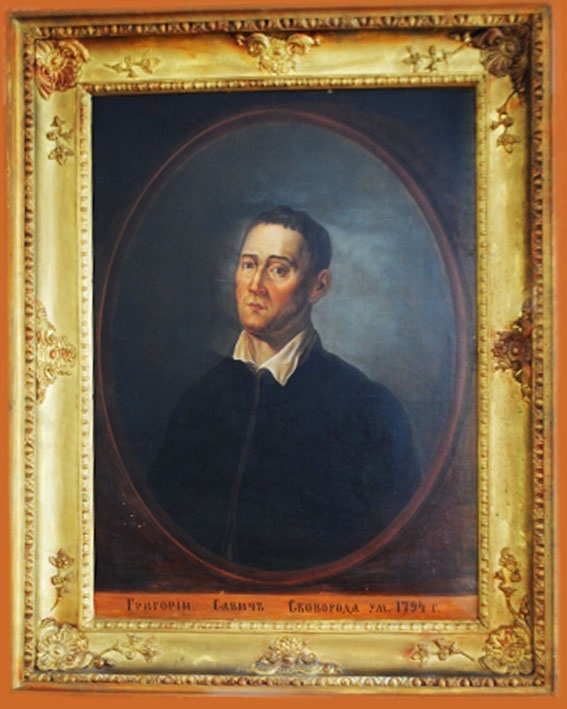
– Has Skovoroda’s grave been preserved?
- Which one? But which one did he dig up? Or the one in which he was later reburied? Sreznevsky wrote down a legend that Skovoroda was first buried in a grave that he dug with his own hands on a mound near an oak tree in Skovorodinovka. And then they were reburied in the cemetery near the church - as was customary in those days.
Recall that in Russia they are trying to prove that Grigory Skovoroda is a Russian thinker. To which President Zelensky said in his daily address to Ukrainians: “It would be funny if it were not bitter that the occupiers are trying to steal this Ukrainian from Ukraine as well. They say something, as if Skovoroda is theirs. But we know they can’t catch him. How to never catch, stop, break or capture Ukraine.”
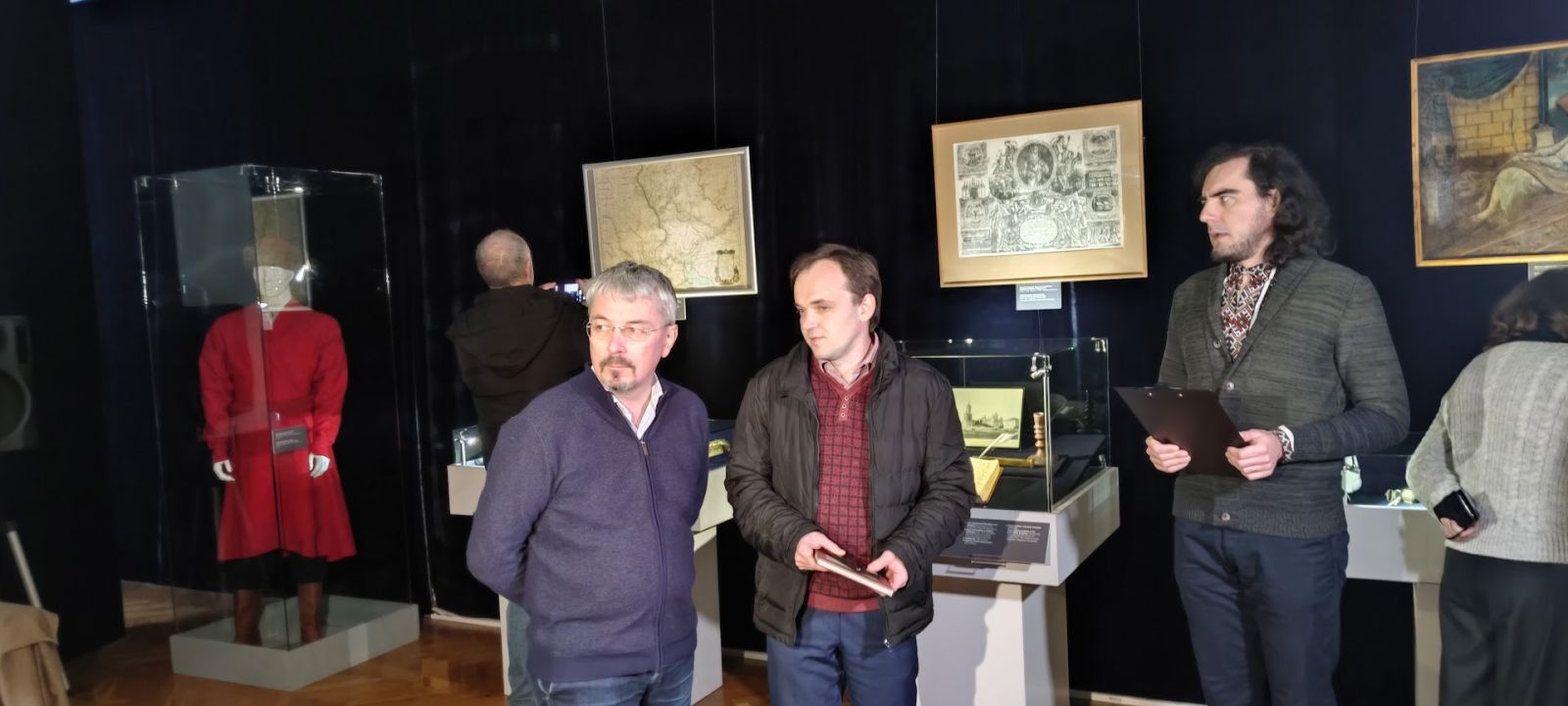
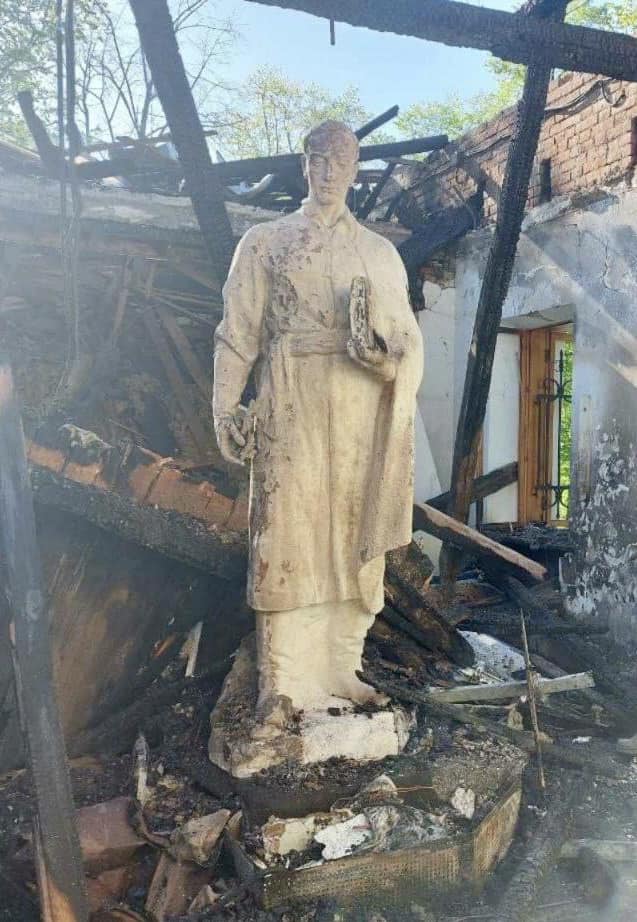
PS At the opening of the exhibition, the Minister of Culture of Ukraine Oleksandr Tkachenko said that the Russian invaders deliberately destroyed the museum in Skovorodinovka. After all, around the house in which he is located, there are no craters from shells and mines, there are no structures damaged by the war. UNESCO allocated funds for the conservation of the building of the destroyed museum for the winter, so that later it would be possible to reconstruct it.
Author’s photo
Source: Fakty

