
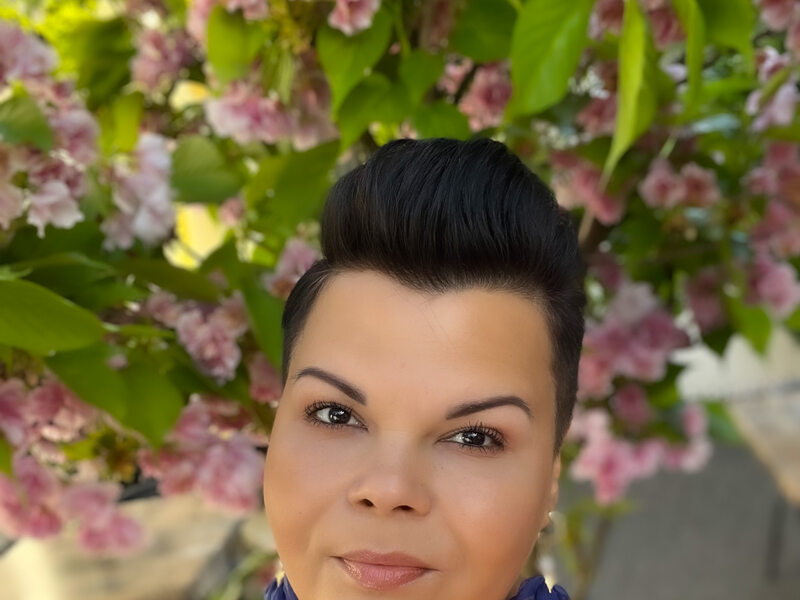

Memories from the emergency department: the doctor refused to do an ultrasound, only asked where I got so much fat from. Now I would not leave it like that, but a person with pain, fever, low self-esteem does not have the strength to fight for himself - Katarzyna Glowińska, president of the Obesity Cure Foundation, says how much this disease costs, treatment and support for those who fight it.
Are you obese? Since? And since when do you know about it?
At 11, my body weight was 82 kg, and at 14, 120 kg. Obesity accompanied me from an early age. I didn’t consider obesity a disease. I was just different, bigger. I was accompanied by a sense of otherness with a great sense of injustice and the question: why can’t I be normal like others?
And how did peers perceive this “otherness”?
Badly. Discrimination is another name for obesity. Already in elementary school there were many unpleasant situations. Nicknames, ridicule, pencil case-folding photos of people in a very advanced stage of obesity. I’m 38 and I still remember it.
I remember when in high school I received a small plastic high chair for small children for Mikolajka’s class, packed in a trash bag tied with red ribbon. This should have made me laugh.
Was there a reaction from the teacher?
My friend was reprimanded for parenting. It’s all. There was not even a conversation with the class, but it was the last Santa Claus organized in our class.
I remember that at that time I had very high blood pressure. Even my mom picked me up from school. It was very sad for me, because this friend knew me well, we went to elementary school together.
Memories of physical education?
I didn’t exercise. As a child, I was diagnosed with desquamation of the femoral head. I had an operation. I was homeschooled - then my weight increased a lot. After that, I was permanently released from physical education. It was convenient for me not to be ridiculed, condemned, to avoid stressful situations.
Today I know that it was a big mistake, because then I was not physically active at all.
When you were 11, 14 - did someone try to help? Doctor or nutritionist?
Yes, there have been attempts at treatment at the Institute of Mother and Child. I remember visiting the doctor; she recommended me very small portions of food. It didn’t work at all. As a child, I didn’t understand this at all, I was just hungry, I didn’t know what was happening to me.
I also remember the period when I took drugs for obesity - but not for long, because after taking them I fell asleep. They had to be removed. Thirty years have passed since then, and these were not the drugs that are available today. If that were the case, my situation might be very different. We now have much more effective appetite control methods.
Sad events in adult life?
Often. Even the doctor. Once I had acute nephritis, the temperature was over 40 degrees. I live in Piaseczno, I was advised to go to a hospital in Warsaw, due to the fact that our hospital does not have a nephrology department. An ambulance doctor in Warsaw refused to perform an ultrasound scan on me. He just asked how I got so fat.
I was left without help, I had to return to Piaseczno, where I spent a week in a ward.
I wouldn’t leave it like this now, but a person in this condition, with pain, fever and, unfortunately, often low self-esteem - because in the opinion of many, a larger person is a weaker, worse, less valuable, less intelligent person. unable to fight for himself.
When did you learn that obesity is a disease? What is the treatment?
In 2012, I turned to a bariatric surgeon. During my first visit to a person who treats obese people, I was given to understand that I was not just bigger, fatter, plumper, plumper - although all these words should not be used - but that I was simply obese. .
I came to this meeting as a “fat” person and left as a fat person.
How was the treatment?
My story is long. I was offered bariatric surgery. First I had an intragastric balloon implanted to prepare me for the right treatment. The balloon was placed for half a year. At that time, I managed to reduce my body weight by 22 kg, unfortunately, various situations led to the fact that I could not have the operation. In 2015, the attempt was made again, and again it failed. Only in 2018, a sleeve gastrectomy was performed.
However, obesity is a chronic relapsing disease. I had a difficult period in my life, it hit me hard. Body weight has increased again. I am currently trying to reduce my weight and am in the process of treatment. I am sure that together with a specialist we will make the right decision in the fight for health. It just goes to show how serious obesity is and how often it means a lifelong struggle.
Is it better to consider yourself “fat” or “fat”?
Many people still perceive obesity from an aesthetic point of view. I have been leading a support group for 4 years now, I have been going to other groups of this type for even longer, and I often encounter a situation where even patients do not treat obesity as a disease. This is also not their fault, because often even doctors do not face this approach. There is no clear message that we need to be treated, that there are effective treatments available and, above all, that obesity is a disease. The simplest advice: “Please eat less, move more.” I think every patient has come across this advice at least once.
Is it not enough to eat less and move more?
Not at the stage of obesity disease. Attitude to obesity as a disease leads to the fact that the patient stops blaming himself: “I’m useless, I ate something again”, “I’m not dieting again”, “It’s my fault.” If we don’t realize that obesity is a disease, we won’t be able to treat it. We will constantly live with the belief that we are worse, that it is our fault, that we have little or no motivation, we do not go to the gym, do nothing with ourselves because we are weak … and this is not an attempt to justify. Obesity is a disease, that’s how hormones work in us: we often have an overproduction of the hunger hormone and too little of the satiety hormone. We cannot fight our hormones alone. Treatment is needed.
There is a second tendency among overweight people that just as one person is shorter and the other taller, one person can weigh more and you have to accept yourself. “Healthy obesity”: maybe this is the right approach?
In my opinion, healthy obesity does not exist. Of course, there are people for whom - we emphasize: so far - this is not associated with great restrictions. However, this approach: “I accept myself, everything is fine, this is my quality” can be fatal. This disease will attack mercilessly at some point. Obesity is a relapsing, chronic and fatal disease. It may turn out that we will be completely immobilized by this disease. I already had big restrictions. I am post hip arthroplasty and this operation was not in demand due to my weight. For several years I was locked up at home, completely dependent on other people. I couldn’t act alone. Obesity is not only more centimeters in the waist and the inability to buy beautiful clothes. The sooner we understand this, the better we can deal with it.
For several years you have run a support group for obese people, especially before or after bariatric procedures. What does such a group give you, what help can you get here. Where did the idea for this group come from?
Over the years, I met many people in the hospital department and polyclinic of the Czernyakovskaya Hospital in Warsaw, we shared experiences. We stuck together. “Grupa Stępińska” arose spontaneously. More than 40 people attended the first meeting. I took the initiative to make the group function online as well, because it’s easier to communicate that way.
There are more such groups, people who are obese turn for help. There are about 700 people in our group, we work closely with the hospital under my supervision. On the occasion of participation in the 1st Obesity Forum of the Polish Society for the Treatment of Obesity, I conducted a survey among the members of the group. I asked what they are looking for in a group, what they are getting. It turned out that the most important thing is the support you can count on here. It is also important to provide information about doctors and places of treatment. The group also includes practical advice on diet and food composition. We compare guidelines and procedures because, unfortunately, they vary from institution to institution. We support each other in sports activities.
The group I lead was originally intended for people preparing for or after bariatric surgery. At present, we have overweight and obese people among us to help at this early stage and be able to prevent the development of the disease of obesity, to prevent the last resort, that is, surgery. Some time ago, people asked mainly about who effectively loses weight, but an obese patient does not need to lose weight, but to be treated.
You have become president of FLO - the Obesity Treatment Foundation. What is its purpose?
The fund is at the stage of registration, and I hope that the process will be completed soon. My decision to start a foundation was strongly influenced by the fact that I was the leader of the group. It made me realize how huge the need for help, for access to information, how lonely the sick are in their struggle with the disease, with rejection even among the closest, how secret we are. At the foundation, we want to raise public awareness about overweight, obesity as a disease and its complications. Spread knowledge about its diagnosis and treatment, as well as the social, economic, professional and family implications.
Through the management of the group, and now the foundation, I see how much my illness has affected me and still affects me. But it also brings something good - helping others.
Each disease always takes something away, but it also gives something. What made you obese? What did she give?
She took a lot. The opportunity to develop my interests, work: I graduated from the school of visage and make-up, but this is a physically difficult profession, I did not have a chance to work in it. Illness has led me to become almost completely dependent on other people. Obesity, arthritis, chronic pain: I couldn’t even go shopping because of it.
You may wonder how a young man cannot go shopping? I lived with chronic pain, had problems with mobility, degenerative changes in the joints. For many years I had to take strong painkillers and walk only on crutches. There was a time when I seriously feared for my life. Not for health, but for life.
Has it changed?
Yes. I have been walking for three years now. When I first went to the store alone, it was an indescribable joy!
Because you can just go to the store?
Buy a roll, bread, the most ordinary, simple shopping. It was surprising to me that I went and bought it myself. Wow!
I walk without crutches, I had arthroplasty, I drive a car. Previously, this was not possible. I dream of helping people like me by working in the foundation, it brings me the most satisfaction.
Your illness has made you sensitive to others…
And awareness of the situation that most of us face. This is helplessness, loneliness, misunderstanding. I have always been a person who thinks more about others than about himself. This disease has shaped me, opened me to other patients. Despite the fact that I myself was in a difficult situation, I tried to find the strength to talk and support people in a similar situation. If I can help someone, even with a kind word, then it is very necessary.
Source: Wprost

