
The death of a loved one, a wedding or the birth of a child are events that allow you to take advantage of a special vacation. Find out its details.
The most important events in life require you to put your work aside for a while and focus entirely on experiencing them. This was the idea behind the introduction of the institution of special leave in the Polish legal system.
This leave in accordance with Article 2982 Law of June 26, 1974 The Labor Code is defined by the Minister of Labor and Social Policy in the Decree of May 15, 1996 on the procedure for justifying absence from work and granting leave to work for employees.
Under what circumstances, to what extent and under what conditions does it operate? All this in this article.
When is special leave granted?
Special leave in accordance with paragraph 15 of the above provision imposes on the employer the obligation to release a specific employee from his work in connection with certain important events that have occurred (or will occur) in his personal life.
What specific events allow you to take advantage of special leave and to what extent? Here’s what the regulation says:
2 days - in case of:
-
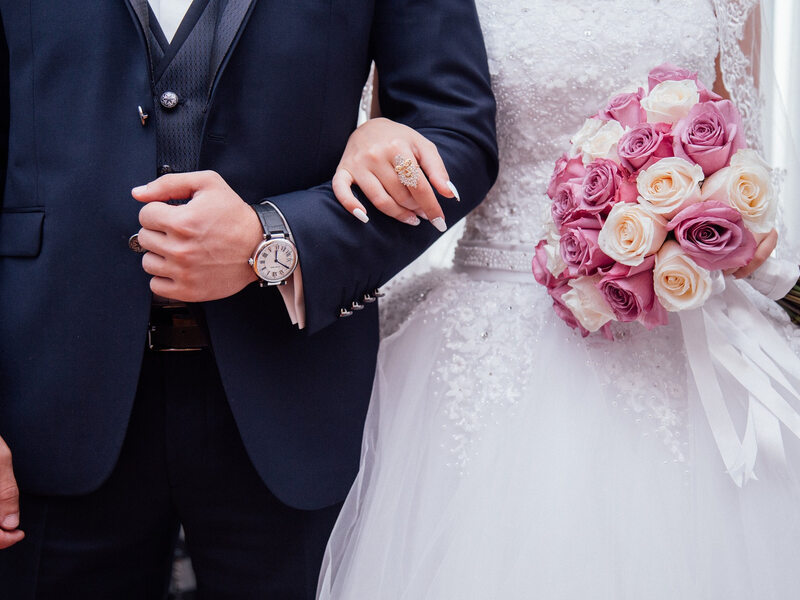
wedding of employees;
-
Birth of an employee’s child;
-
Death and funeral of the spouse of the employee or his child, mother, father, stepmother or stepfather;
1 day - in case of:
-
the wedding of an employee’s child;
-
Death and funeral of an employee’s sister or brother, mother-in-law, father-in-law, grandmother, grandfather, as well as another person who is dependent on the employee or under his direct care.
Special leave rules
Special leave should be used on days when the employee was required to work. At the same time, the provisions nowhere indicate whether special leave should fall on those specific days on which the events that served as the basis for the leave took place (for example, when a person close to the employee died). However, practice and the voices of the teaching suggest that vacation does not necessarily fall on these days, but should be closely related to them - both in a causal and in a temporal context.
This means that, for example, special leave for one’s own wedding does not have to be used on the day of the wedding or the day immediately before it, but can also fall on the days of the week before the wedding (since these days will be the time for preparation for the wedding ceremony for the groom and bride) or a week after the wedding (due to the formalities required to complete offices and banks - which are associated with marriage).
Importantly, the two-day special leave does not have to be used all the time. You can separate it and, for example, use one a week before the wedding and another a week after the ceremony. However, it is important that both dates when the leave is taken are somehow related to the event in connection with which it is due.
As a rule, the employer must be informed in advance of the willingness to use special leave. Of course, there are situations when this will not be possible. After all, no one is able to accurately plan the date of such a dramatic event as the death of a loved one. In this case, however, the employer must be informed as soon as possible - but no later than on the second day of using the special leave (this follows from paragraph 2 of the Decree of the Minister of Labor and Social Policy of May 15, 1996 on the procedure for justifying absence from work and dismissal of workers).
Compensation for special leave - is it paid?
In the light of the repeatedly cited paragraph 16 of the provision, the employee retains the right to pay for the period of leave from work within the framework of special leave. This remuneration is calculated in the same way as holiday pay. Therefore, it is 100 percent. the wage the worker would have received had he or she normally been at work at that time. On the reduction of wages (as, for example, during sick leave) is out of the question.
Need to confirm an event
Although not expressly stated in the rules, it is common practice that the event that qualifies us for special leave must be justified and properly documented. An employer providing us with such leave is not obliged to take our word for it that this event actually happened.
In the event of a wedding, we will show him a marriage certificate, in the event of the death of a loved one - a copy of the death certificate, and in the case of the birth of a child - a birth certificate.
Source: Wprost

I am George Brown, author at Daily News Hack. I mostly cover economy news and I have been doing this for quite some time now. I have a lot of experience in this field and I’m always looking for new opportunities to learn more.

