
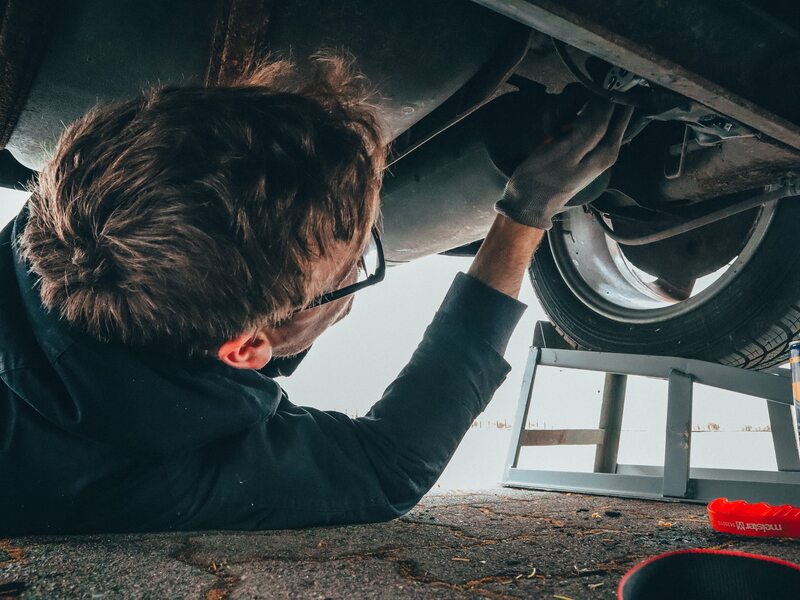

Oil and fluid stains are different, but all stains should be of concern to the driver. Nothing should leak from a running machine. Learn what to do to prevent fluid leaks and how to determine what they mean.
Many drivers are faced with leaks of engine oil and other fluids. Initially, any stain under the car may look harmless, but ignoring this problem can have serious consequences. Q Service Castrol experts suggest what needs to be done to identify their sources.
Don’t underestimate the problem
When parking a car in various places, drivers often do not notice traces of fluid flowing from vehicles. An alarm signal is only alarming readings of indicators on the dashboard.
- Often, drivers learn about leaks only during a scheduled technical inspection of the car, which most often results in a negative inspection result. Delaying the detection of a defect can lead to serious failure of the drive unit, therefore any signals indicating such malfunctions should not be ignored - says Shimon Sabat of Castrola.
Leaks from under the car can also have legal consequences, such as the evacuation of the car to a deposit parking lot at the expense of the owner, as well as the preservation of the registration certificate during road control, which is simultaneously associated with a ban on further driving.
Leakage can result in engine failure.
There are many types of fluids that can leak from your vehicle. This can be engine oil, fuel, transmission oil, power steering oil, brake fluid, coolant, and air conditioning and cooling system leaks.
- If the engine oil level is too low, the engine may seize. In turn, coolant leaks can cause the engine to overheat and, as a result, damage the head gasket or even the head itself. A brake fluid leak should also alert us, as it often reduces the efficiency of the entire system. In extreme cases, this can cause the brakes to stop working altogether. says Marta Cyselska of Q Service Castrol.
How to determine the source of a leak?
Most fluid tanks, especially transmission oil and coolant, are located at the front of the vehicle. However, there is a group of fluids that circulate in systems that are also located at the rear of the vehicle. Traces of brake fluid most often appear near the wheels, and differential oil stains are often found near the differential on the rear axle of a car. Not only the location of the working fluids will help determine the source of the leak. Their color and smell are also key.
Engine oil traces are black or dark brown, and coolant may be green, blue, and in some cases red. Coolant usually leaves spots of an oily and “fluffy” consistency, while gasoline and diesel fuel can be identified by a characteristic smell. A malfunction in the air conditioning system may be indicated by a leak of water, refrigerant or compressor oil.
Regardless of which system is affected by the leak, visit an auto repair shop immediately to diagnose and fix the problem.
Source: Wprost

